


Autism North East - School/Nursery Observation/ Liaison

Why do we always need a School/Nursery Observation or Liaison?
Children can behave and communicate differently depending on where they are, who they are with and what is happening around them. Some children may appear to cope very well at school but use a great deal of effort to do so, and parents can see the 'fall-out' once they get home and the child either appears exhausted, fractious or 'wired'.
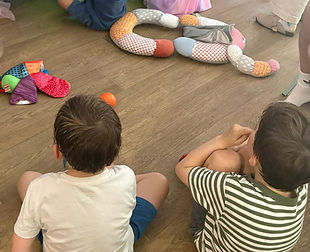
For children in nursery or primary school, a direct observation gives us an opportunity to see your child in a familiar, everyday environment and provides an important part of the overall assessment picture.
A school observation also gives us the chance to establish a relationship with teachers so that we can work productively together to support your child. We are a well respected team in the area and already know many of the SENCOs supporting children in schools, which makes is much easier for us to have good working relationships.


For children in secondary school, we tend to link with teachers who know them best instead of going into school so that we can get their persepectives on the child.
During the observation/liaison, we focus on how your child:
-
Communicates and interacts with other children and adults
-
Manages the social demands of the classroom or nursery
-
Responds to changes, transitions and expectations
-
Engages with learning, play and activities
-
Experiences and responds to the sensory environment
-
Manages attention, emotions and regulation
-
Uses their individual strengths, interests and strategies to navigate the school day
The aim is not to judge your child, their behaviour, or the school - it is simply to understand how they experience and manage their everyday environment.
An observation can help us consider both the things a child finds easier and those that may require more energy, support or adaptation.
Information from the observation is considered alongside the other parts of the assessment, including developmental history, information from parents or carers, assessment appointments and information from education professionals.
No single observation is used on its own to determine whether a child is autistic.
Bringing these different sources of information together helps us develop a fuller understanding of each individual child's strengths, needs and experiences, and enables us to make meaningful recommendations for support at home and in education.

Client
All my struggles were translated into an incredibly detailed yet accessible report (as well as a summary for my GP). This was personalised for my needs regarding work as well as pinpointing very practically and easily how I can help myself.
Client
There was real care about my future and I know that ongoing support will be there if I wish it.
Client
I can’t put a price on what they have done for me.
Client
I've much respect that ANE is a social enterprise.


